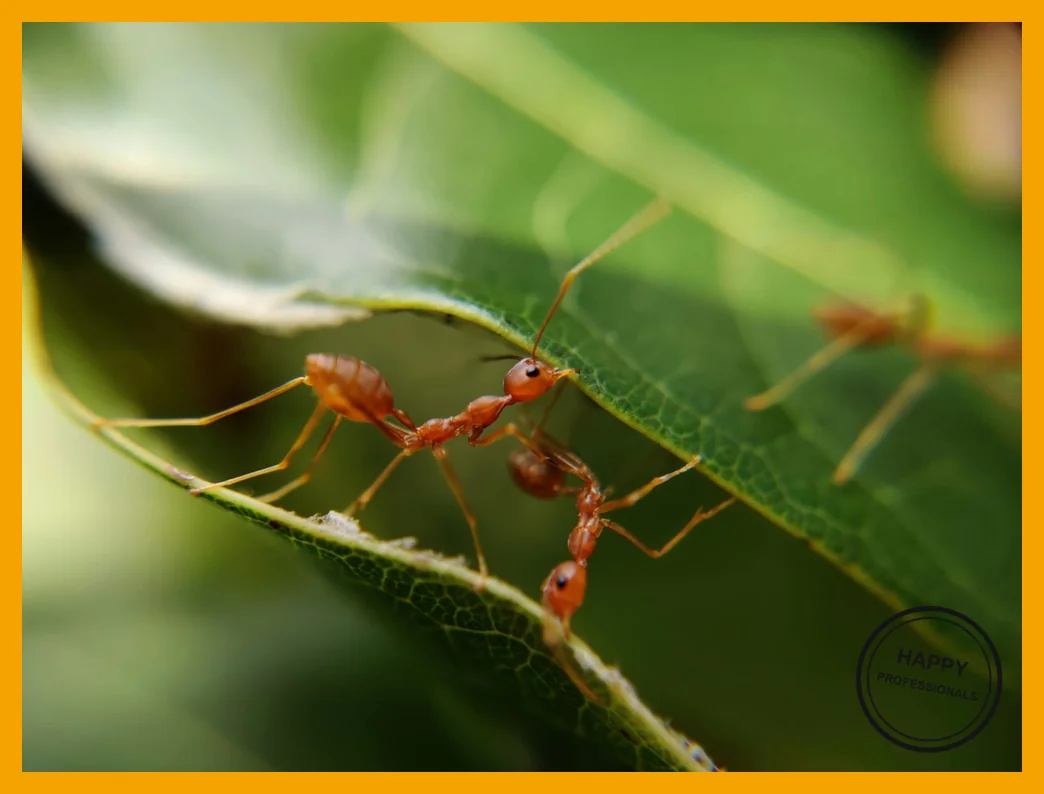
An ant doesn't look like much. Together, ants carry weights many times their own body weight, build colonies of millions of individuals, and solve problems no single animal could manage alone. Not by working harder, but through clearly divided roles and a shared goal.
Clear roles, no competition
In an ant colony, there's no debate over who's responsible for what. That clarity prevents friction and duplicated work. In teams where roles stay vague, the opposite often happens: people working over each other, or holding back because they assume someone else has already picked it up.
The collective beats the star
No single ant steals the show. The colony's success is never the result of one exceptional individual, but of thousands who know exactly what their contribution is. Organisations that lean everything on a few star players are vulnerable the moment those people leave. Organisations that invest in the collective are far less so.
Signals that spread
Ants communicate at lightning speed through scent trails: if one ant finds a good route, the whole colony knows about it in no time. That's a lesson for teams too: the faster knowledge and signals spread, the faster an organisation can adapt.