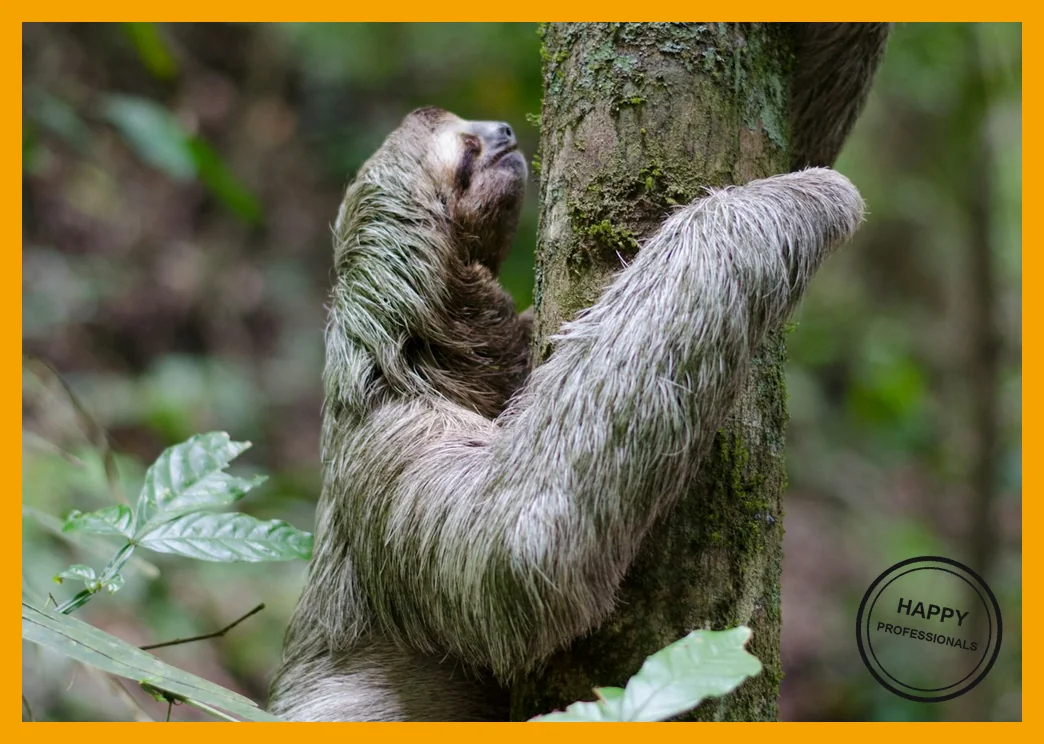
The sloth is an evolutionary success story, and that's not despite its slow pace, but because of it. By barely wasting any energy, a sloth can live off food that would starve other animals. Slow isn't a shortcoming for the sloth. It's the strategy.
Running flat out isn't a sustainable model
In many organisations, speed passes for proof of commitment: whoever works the longest hours and is the most reachable seems the most engaged. But a team that constantly runs at top speed might deliver more in the short term, and less in the long term, through absence, turnover and the mistakes that creep in once nobody has room left to think.
Signs the pace is too high
Constant overtime that becomes the norm instead of the exception. Holiday days that never get taken. Meetings booked so solid there's no time left to actually do the work. Those aren't signs of a healthy organisation, but of a team running on reserves.
How you guard the pace
A sustainable pace doesn't happen on its own, it gets actively protected: realistic planning, breathing room between projects, and managers who show, by example, that rest isn't weakness. An organisation that takes that seriously keeps its best people standing for longer.