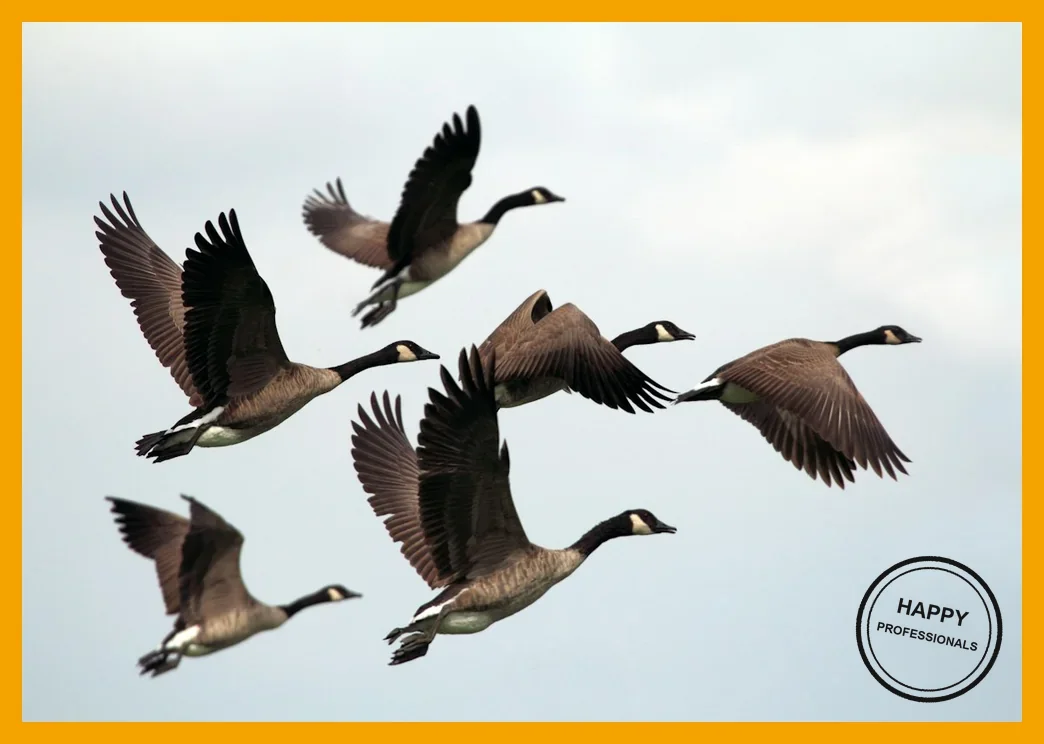
Animals sometimes make it look surprisingly simple. Working together. Trust. Setting boundaries. Taking rest. And doing what gives you energy. Really, exactly the ingredients we sometimes lose sight of at work.
Working together without competing
A flock of geese flies in formation, and the lead bird keeps changing. Nobody stays the leader for the whole journey, and nobody minds: leading takes the most energy, so whoever gets tired falls back and someone else takes over. The goal matters more than any one ego. In teams that lean heavily on individual stars, that's often exactly where it goes wrong: everyone wants to fly up front, nobody wants to fall back, and the formation falls apart.
Trust that doesn't need spelling out
The geese at the back follow the lead bird without checking whether the course is right. That trust isn't naive, it's functional: questioning every decision the leader makes costs time and energy the whole group simply doesn't have. Trust works the same way at work. A team that constantly has to check each other's work is never faster than its slowest bit of distrust.
Setting boundaries without guilt
Animals set boundaries without explaining or apologising. An animal that's tired falls back in the formation. An animal that wants to be left alone makes that clear. There's no guilt, no justification, just a signal. People often make it far more complicated: setting a boundary feels like failing, when it's exactly what keeps a team standing in the long run.
Taking rest as a strategy
No animal flies, hunts or works nonstop. Rest isn't a break from the effort, it's part of it. Without rest there's no next flight, no next hunt, no next day. The same logic applies at the office, even though it often gets ignored there: a team that never pauses might deliver more in the short term, but has nothing left in the tank when it really counts.
Doing what gives you energy
Within a group of animals, not every animal does the same thing. One hunts, another keeps watch, a third looks after the young. That division isn't random, it fits what each animal is naturally good at and gets energy from. That's exactly the heart of good recruitment too: not judging everyone against the same list of requirements, but looking for what someone is naturally good at and genuinely enthusiastic about.
Working together, trust, setting boundaries, taking rest, and doing what gives you energy: these aren't separate lessons, they're one whole. That whole is exactly what we look for when we help organisations put the right people in the right place.