Happiness at work quickly sounds like a soft topic: nice to have, but not something a board of directors loses sleep over. That's a misunderstanding, though. Organisations that take happiness at work seriously see less turnover, less absence, and fill vacancies faster, with exactly the people they actually want. Happiness at work isn't an extra bolted onto the strategy. It is the strategy.
What happiness at work delivers
An employee who enjoys their work stays longer. Staying costs no recruitment budget, no onboarding time, and no risk of knowledge walking out the door. On top of that, satisfied employees are the best ambassadors: they talk about their work, and that story reaches exactly the people a job ad never would.
Playful and the best at it
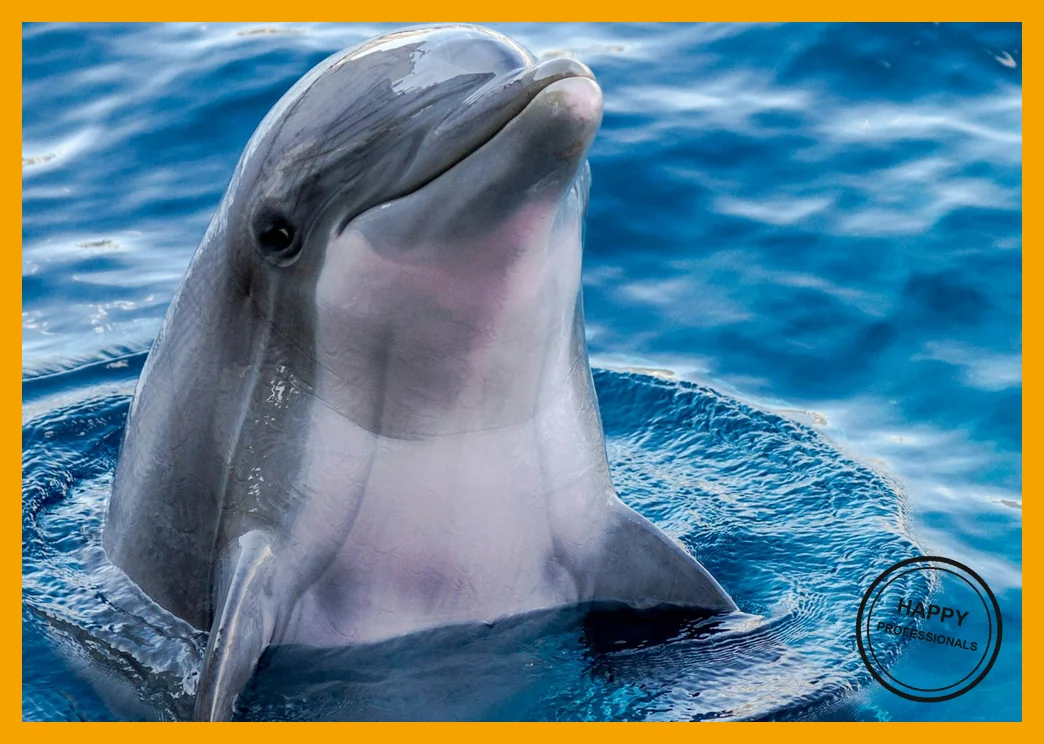
A dolphin is a great image for what happiness at work means in practice: play and top performance go perfectly well together. Dolphins are among the most playful animals there are, and at the same time among the smartest. They hunt strategically, as a group, with a clear division of tasks. Happiness at work and results aren't opposites. The teams having the most fun are often also the teams performing the best.
Where it already starts
Happiness at work doesn't begin on day one. It begins with the first contact with a candidate: how a vacancy is written, how an interview feels, how quickly and honestly you follow up. Candidates already sense in that first conversation whether an organisation takes this seriously, or just promises it on paper.